
Article 1: Why Look at International Touring in a Time of Crises?
Why Look at International Touring in a Time of Crises?
The Role, Realities and Necessity of International Touring for Australia’s Small-to-Medium Arts Sector
19 December 2025
Dr Kristen Maloney
At the 2025 Performing Arts Market in Seoul (PAMS), the Artistic Director of the Seoul Performing Arts Festival, Kyu Choi, opened his address with a striking assertion: “We are always in crisis.” He was referring to South Korea’s current polycrisis moment, including the attempted self-coup by President Yoon Suk-yeol in December 2024, the subsequent impeachment and political polarisation, and accelerating demographic shifts and social fragmentation as younger generations leave rural areas and public trust declines.
The statement rippled through the PAMS delegation and prompted deeper questions throughout the week. If crisis is now the default rather than the exception, what is art’s role in responding? And what responsibilities and pressures fall on arts organisations operating within such conditions?
Before pursuing these questions further, I need to step back and explain why I was at PAMS in the first place. I was at the beginning of a three-month producing fellowship in Taiwan, supported through the Lord Mayor’s Creative Fellowships, an initiative of Brisbane City Council, and The Ian Potter Cultural Trust Emerging Artist Grants.
The fellowship came with a clear, and at times daunting, brief: to investigate new models of touring, connection and collaboration between Australian small-to-medium arts organisations and the Asia–Pacific region. The aim was not only to inform the work of Belloo, where I work as Producer, but also to contribute insights to a broader Australian sector navigating a rapidly shifting global landscape. What worked prior to the COVID-19 pandemic, or continues to function for larger, well-resourced organisations, no longer aligns with the operational realities of companies like ours.
Belloo is a Brisbane-based, female-led contemporary performance company founded in 2013, known for its bold, interdisciplinary approach, which blends text and movement to create original, dynamic performances, installations, and digital content that resonate locally, nationally, and internationally. The company has premiered eleven original works and maintains a strong track record of relationship-based partnerships with artists, communities and major presenting organisations, including Queensland Theatre Company, Brisbane Festival, Queensland Performing Arts Centre and Brisbane Powerhouse. What sets Belloo apart is its commitment to deep audience and artist engagement. Its works don’t just entertain—they activate communities, forging lasting relationships with audiences and artists. This is evident in its foyer installations, which extend each performance beyond the stage; digital content, which includes SBS On Demand, large-scale building projections, and intimate micro-cinema experiences; and mentorship programs, which cultivate the next generation of artists.
As a producer, my practice sits at the intersection of contemporary performance, interdisciplinary collaboration and international touring. I began producing in my second year of university after noticing a gap—emerging artists often lacked the confidence or know-how to produce their own work. To change that, I founded Backyard Theatre Collective, which focused on making theatre anywhere—even in backyards. While completing my undergraduate degree, I produced and toured early-career artists’ work nationally to festivals including Anywhere Festival, Melbourne Fringe, FRINGE WORLD Perth, Festival of Australian Student Theatre, Adelaide Fringe, and Wonderland Festival.
I’ve worked as Associate Director with Circa Contemporary Circus, touring nationally and internationally with one of Australia’s most prolific producing companies, and my most recent producing work prior to the fellowship was Back to Bilo, Belloo’s Major Festivals Initiative-funded production which premiered at Brisbane Festival and Queensland Theatre Company. The work tells the true story of a refugee family through mediated technology, embodied performance, and verbatim text. Alongside my producing practice, I’ve completed a PhD in augmented reality performance.
Throughout the fellowship, I investigated what sustainable, artist-led touring might look like in the coming years. Drawing on research, market attendance, and a series of conversations and exchanges conducted across Taiwan and the broader Asia-Pacific region, I sought models that prioritise relationships over transactions and long-term reciprocity over one-off engagements. Crucially, these models also needed to be financially viable, compatible with existing funding structures, or accompanied by clear recommendations for how those structures might need to change, and capable of supporting the development of high-quality artistic work that meaningfully engages audiences.
This context matters because it explains why Choi’s statement landed with such force for me. It sharpened the urgency of the questions underpinning this research: how resilience might be built within international touring, how collaboration across borders can be sustained, and how Australia’s small-to-medium arts sector can continue to operate, and even thrive, in a world increasingly defined by crisis.
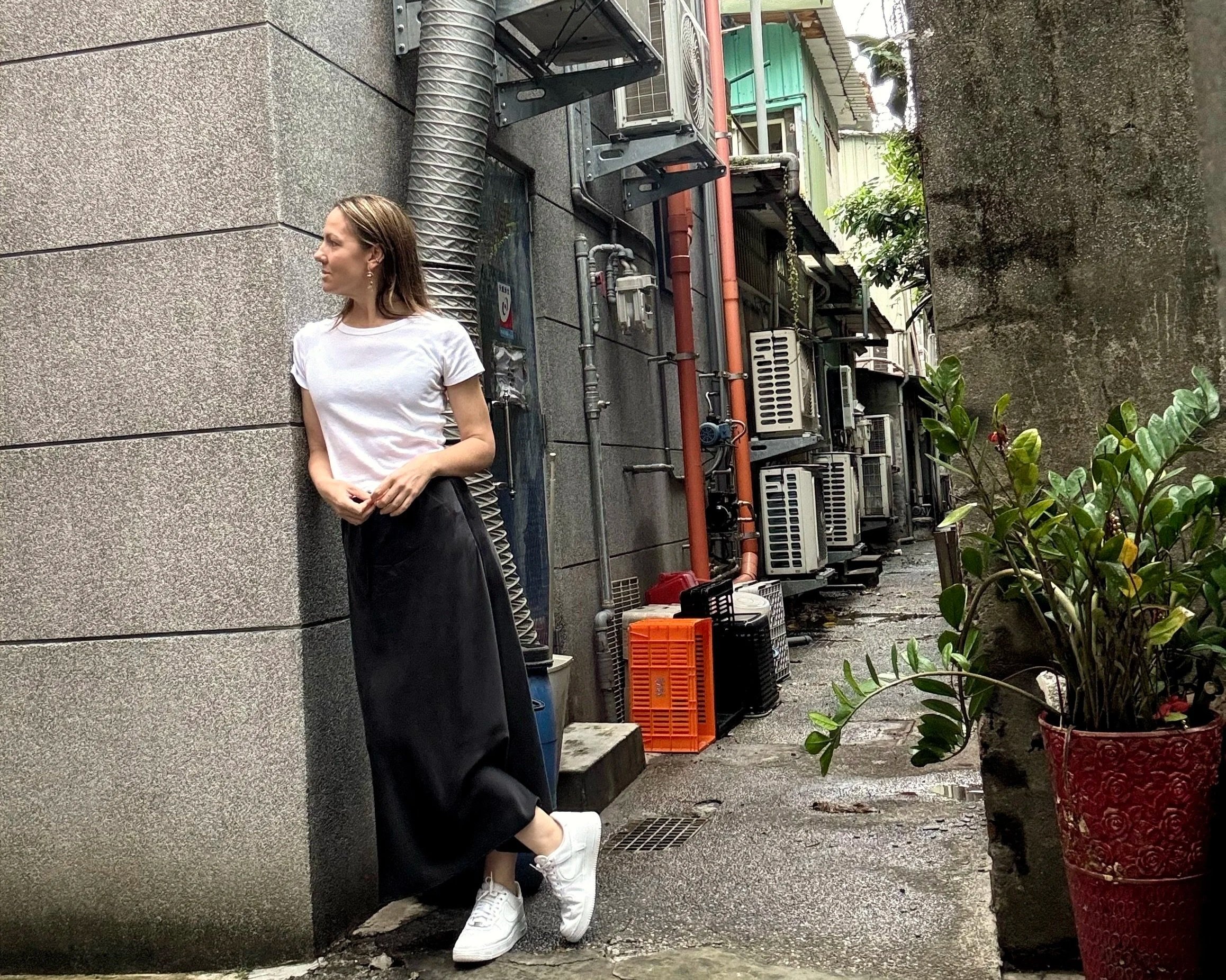
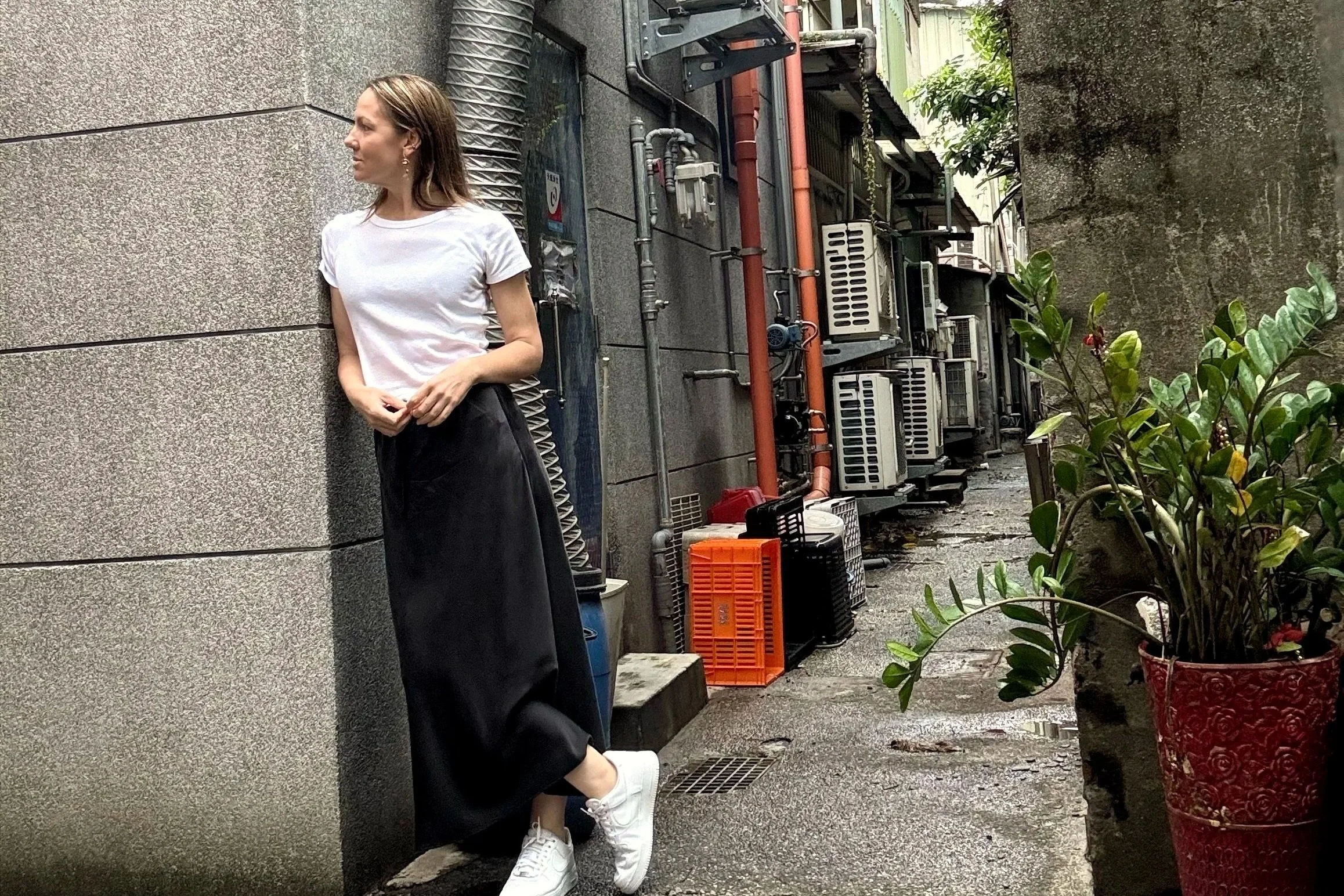
Kristen Maloney in Taipei, Taiwan (2025).
Is There Even a Problem? Yes — Multiple. And They’re Structural, Not Temporary.
Australia’s current cultural policy explicitly frames “thriving” as an aspiration for the sector rather than a description of its present condition. Yet this distinction is often flattened in public discourse, where the visibility of major festivals or well-resourced major organisations can be misread as evidence of sector-wide health. For small-to-medium arts organisations—identified consistently in Creative Australia research as the primary site where new Australian work is developed, tested and first presented, and as a crucial pipeline for artists who later work on major stages—the operating reality is one of compounded structural pressure. These pressures include economic precarity, workforce contraction, climate constraint and policy instability.
These pressures are not anecdotal. They are well documented across Creative Australia reports, national surveys and workforce studies. What matters for my research is not simply that pressure exists, but how they interact and compound to narrow the sector’s capacity to circulate work beyond Australia. International touring is not disappearing because of declining artistic ambition; it is becoming structurally harder to sustain.
Recovery but not recovered
Creative Australia describes the cultural economy as “in recovery but not recovered.” For touring, this distinction is critical. While attendance in major metropolitan centres has improved, audience return remains uneven, particularly for small-to-medium work and in regional contexts. In response, many venues have recalibrated their risk exposure, a shift that shows little evidence of reversing even as (or if) broader conditions stabilise.
This recalibration is visible in programming and contracting decisions. Fewer presenters now offer guaranteed fees. Door splits are increasingly favoured over buy-ins, seasons are shorter, and artists are often expected to absorb marketing and production costs that were previously shared. Taken together, these changes represent a structural redistribution of financial risk away from venues and onto touring parties. With cancellations still more common than before 2020, and revenue volatility remaining high, touring income has become less predictable precisely at the point where touring parties are being asked to carry more risk.
For small-to-medium organisations, touring fees are not supplementary income but a core mechanism for covering costs that are not met through project or touring funding, including staff time, organisational overheads and the true costs of remounting work. As public funding rarely operates on a full-cost basis, earned income from touring plays a central role in making circulation viable. When touring income becomes unstable, the effect is not limited to reduced revenue. It reshapes organisational behaviour, compressing planning horizons, undermining staffing continuity, and discouraging advance commitments.
In this context, the long lead times and deferred returns associated with touring become increasingly difficult to justify, even where artistic interest and market demand exist. What emerges is not a temporary slowdown, but a touring environment that systematically favours organisations with sufficient reserves to absorb risk.
Structural precarity is constraining creative ambition
Australia’s small-to-medium arts sector is operating under conditions of acute and ongoing financial strain. Recent studies, including Creative Australia’s Arts and Culture Workforce report (2022) and the National Sector Survey (2024), point to a consistent pattern: wages have stalled, production costs continue to rise, and organisational reserves are thinning. The Australia Institute’s Creativity in Crisis briefing (2023) further notes that many organisations are now carrying structural deficits that cannot be resolved through project funding alone.
What distinguishes this period from earlier cycles of constraint is not simply the depth of underfunding, but its persistence and predictability. Stable multi-year investment has become increasingly difficult to secure. In 2023–24, Creative Australia received more than three times the number of eligible applications for multi-year funding than it could support, with similar pressure reported at state levels. As a result, short-term funding has become a default operating condition. Without predictable funding horizons, organisations struggle to maintain staffing continuity, plan confidently, or commit to the long lead times required for touring and international engagement.
This contraction of organisational time is mirrored at the level of individual practice. Creative Australia’s National Arts Participation Survey (2022) shows that more than half of professional artists rely on non-arts income to sustain their work. While often framed as adaptability or resilience, this reliance reduces the time, flexibility and availability required to develop new work, respond to touring invitations, or travel when opportunities arise. Capacity is increasingly shaped by an artist’s ability to absorb unpaid labour and personal risk, rather than by artistic readiness or market interest.
As precarity becomes structural rather than episodic, it reshapes how organisations operate. Risk-taking becomes harder to justify, planning horizons shorten, and ambition is recalibrated toward what can be sustained under conditions of uncertainty. The consequence is not a lack of creative potential, but a growing mismatch between what organisations are capable of imagining and what they are able to realise and circulate, particularly at national and international scales.
Climate pressures destabilising touring models
The climate crisis introduces a further structural constraint on touring for small-to-medium organisations. Research consistently shows that touring is among the largest sources of emissions in the performing arts, with air travel and freight accounting for approximately 70–90 per cent of a production’s total carbon footprint, even for modest performance works. In response, presenters across Australia, Europe and North America are under growing pressure to reduce high-carbon programming, and many now require visiting artists to provide environmental reporting, carbon estimates or low-carbon touring plans as part of contracting.
For organisations that rely on international touring, this produces a structural contradiction rather than a temporary challenge. Touring remains essential for visibility, income and long-term relationship building, yet the very practices that enable circulation are increasingly treated as liabilities. As presenters favour low-carbon options, reduce travel budgets and avoid freight-intensive work, environmental criteria function as a gatekeeping mechanism. Decisions about what travels are no longer shaped solely by artistic relevance or audience demand, but by an organisation’s capacity to demonstrate environmental compliance.
Crucially, this capacity is not evenly distributed. Large organisations are better positioned to absorb the costs of environmental planning, risk assessments, redesigned sets, extended stays or carbon accounting systems. Small-to-medium organisations, operating with limited staffing, thin reserves and compressed timelines, are expected to meet comparable standards without additional resourcing, time or infrastructure. In effect, sustainability requirements are layered onto an already precarious touring ecology without addressing the structural conditions that shape who can comply.
This critique is not an argument against sustainability in touring. On the contrary, environmentally responsible practice is both necessary and urgent, and the performing arts sector has a clear role to play in reducing its carbon footprint. The risk lies in how greener touring is currently being operationalised. Without targeted investment and coordinated policy support, sustainability frameworks may narrow international touring pathways to organisations with scale and capital, while excluding smaller companies whose work is often the most adaptable, innovative and culturally distinctive. For the small-to-medium sector, the question is therefore not whether touring must become more sustainable, but how that transition can occur without embedding structural exclusion as its unintended outcome.
Burnout is now structural, not situational
Burnout is no longer a short-term post-pandemic issue; it has become a structural condition across the small-to-medium sector. Recent I Lost My Gig reporting documents sustained levels of chronic stress, financial precarity and a reduced capacity for creative risk-taking among independent artists and small organisations. Creative Australia’s National Arts Participation Survey (2022) similarly notes that professional artists are working fewer paid creative hours than at any point in the past decade, with exhaustion and financial strain identified as significant barriers to maintaining practice.
International touring relies on three core capacities: sustained administrative bandwidth to manage contracts and logistics; physical stamina to meet the demands of travel and production schedules; and creative focus to adapt work across different contexts. Burnout erodes each of these capacities. Teams experiencing chronic fatigue or reduced bandwidth delay decisions, scale back ambition, or withdraw from opportunities because they lack the time, energy or stability required to sustain touring.
These pressures are compounded by the significant contraction of Australia’s cultural workforce since COVID-19, a shift felt most acutely in the small-to-medium sector. Many arts workers did not return, citing burnout, wage insecurity or the need for more stable careers. Those who remain now carry substantially heavier administrative loads across grant writing, contracting, touring logistics, compliance and reporting. For organisations that typically operate with one or two core staff, this creates a structural bottleneck that directly limits their ability to pursue or sustain international opportunities, even when demand exists.
Rather than a temporary dip following the pandemic, the evidence points to a long-term erosion of time, energy and organisational capacity. The consequence is a narrowing of who can realistically operate in international markets. When baseline conditions for participation involve chronic overwork, reduced staffing and ongoing fatigue, only the most resourced organisations can keep pace. The small-to-medium sector therefore risks being structurally sidelined from international engagement through attrition rather than a lack of artistic ambition.
Production-and-disposal cycle
Across the sector, there is frequent reference to “shrinking seasons,” yet the implications for touring and sustainability are rarely articulated. In much of Australia’s small-to-medium sector, a season may consist of only two to 10 performances before a work disappears from public view. As a result, many works are effectively decommissioned almost as soon as they premiere, long before artistic refinement, audience development or touring pathways can be realised.
This pattern is not accidental. Creative Australia’s research on the performing arts workforce and organisational sustainability points to a funding environment that strongly incentivises production over circulation. Project-based funding prioritises the creation of new work while providing limited support for remounts, market development or long-tail touring. Risk is transferred downwards. Companies are required to continually generate new outputs in order to remain viable, even when existing work has demonstrated artistic strength and audience appeal.
Darcy Grant, Artistic Director of Gravity and Other Myths, has described this dynamic as an “addiction to new work.” Resources are concentrated at the point of premiere, after which works are frequently abandoned, not because they lack value, but because the system offers few mechanisms to sustain them. This produces a production-and-disposal cycle, in which artworks are treated as short-term outputs rather than long-term cultural assets.
For touring, the consequences are significant. Relationship-based touring, particularly international touring, relies on repetition, trust and the gradual accumulation of visibility across markets. When works are retired after minimal presentation, organisations are unable to build touring arcs, respond to presenter interest over time, or adapt works to different contexts. The system effectively prevents the slow, strategic circulation that international engagement requires.
Political volatility and unstable cultural policy
Layered onto artistic and economic pressures is more than a decade of political volatility and shifting cultural policy at the federal level. Since the mid-2010s, Australia’s arts funding landscape has undergone repeated structural change, including agency restructures, program closures and rebadging, and frequent shifts in eligibility criteria and strategic priorities. Creative Australia’s corporate planning documents describe the current period as one of rebuilding following prolonged disruption, underscoring the cumulative effects of this instability rather than a discrete policy reset.
While such volatility is disruptive across the sector, workforce and organisational research consistently shows that small-to-medium organisations are disproportionately exposed. With limited reserves and a heavy reliance on project-based funding, they are less able to absorb sudden policy shifts, adapt programming at speed, or carry unfunded transition costs between policy cycles. What might be manageable disruption for large institutions becomes an ongoing condition of uncertainty for smaller organisations.
Recent federal strategies have placed a strong emphasis on the Indo-Pacific, aligning cultural policy with broader diplomatic and trade objectives. While this focus is clearly articulated in national cultural frameworks, it has introduced new uncertainty for organisations that have spent many years building relationships in North America and Western Europe. These markets have not disappeared, but the absence of clear transition pathways or parallel support mechanisms has left some long-term international relationships suspended between policy priorities rather than actively supported.
At the same time, the infrastructure that once underpinned international engagement has significantly thinned. Australia previously maintained dedicated international arts roles in North America, Western Europe and Japan, focused on market development and long-term relationship building. Those roles no longer exist in the same form, and no equivalent, ongoing infrastructure has replaced them. As responsibility for international engagement has increasingly devolved, the labour of strategy, diplomacy and market maintenance now sits largely with under-resourced organisations and individual producers.
Small-to-medium organisations are expected to align with changing geopolitical and funding priorities without the policy stability, institutional support or long-term investment frameworks required to make those priorities workable in practice. The result is not simply reduced international activity, but a narrowing of who can realistically sustain international engagement over time.
Why this matters for international touring
In the current climate, it has become increasingly common to hear the question: why tour internationally at all? Why persist with a practice that is expensive, administratively complex, environmentally fraught and financially precarious? Why not stay in Australia?
This question was put to me directly by a senior Canadian international market strategist. It is not an unusual view. But it misunderstands both the structure of Australia’s performing arts ecology and the role international touring plays within it.
International touring is not a default ambition, nor a universal marker of success. Many Australian small-to-medium companies build strong, meaningful practices entirely within the domestic market. That is not in dispute. However, for certain kinds of work (research-led, interdisciplinary, culturally specific or formally experimental), touring internationally is not an indulgence. It is often the most coherent extension of the practice itself.
Australia’s domestic touring circuit is small, geographically dispersed and highly competitive. Research by Creative Australia and multiple sector reviews consistently shows that small-to-medium companies operate within narrow windows of presentation: short seasons, limited remounts and intense competition for slots. The life of a work is compressed, and conditions that support iteration, return and cumulative audience engagement are rare. For some practices, particularly those that deepen through encounter and dialogue, the domestic circuit struggles to provide sufficient time, context or continuity.
International touring does not simply extend the life of a work; it changes the conditions under which it is read. As one artist told me during my fellowship, “Touring isn’t repetition. It’s transformation.” New cultural contexts surface different meanings, test assumptions and reshape how a work functions. In this sense, touring operates as a form of dramaturgical inquiry. The work is not finished and then exported; it continues to evolve through encounter.
When artists and producers spoke to me about why they tour internationally, they rarely spoke about scale or prestige. They spoke about context. One artist put it simply: “We tour internationally to reach audiences we can’t easily reach at home. Our work sits between sound, music and performance, and it has particular traction in the Asia–Pacific.”
These observations align with Creative Australia’s recent research into international engagement, which emphasises depth of relationship, cultural specificity and long-term exchange over volume or reach. Touring, in this framing, is not about expansion for its own sake but about placing work where it can be properly received.
International exchange and engagement become even more relevant as geopolitical instability and fractured diplomatic relationships place limits on formal state-to-state engagement. Australian cultural policy increasingly frames people-to-people exchange as a cornerstone of international relations. In practice, this work is slow. It relies on return, presence and reciprocity over time. Trust is built not through one-off appearances, but through familiarity and shared process.
Small-to-medium companies are particularly well suited to this mode of working. With flatter structures and closer artist relationships, they can sustain partnerships across years rather than resetting with each presentation. At Asia–Pacific performing arts markets, presenters repeatedly expressed a preference for artists who return, remain engaged and understand local contexts. Long-term touring was described as a way to build trust, reduce risk and enable cultural specificity, benefits that transactional touring cannot deliver.
What is at risk if we do nothing?
The consequences are not abstract. Booking timelines have shortened dramatically. Where companies once had eighteen months to secure partners and funding, they may now have six. When funding outcomes arrive too late, tours are cancelled. Choreographer Stephanie Lake has spoken publicly about the reputational damage this creates: presenters will tolerate only a finite number of withdrawal emails before they quietly stop inviting Australian work.
At the same time, a survival mindset is becoming permanent. Organisations are increasingly focused on getting through the next year rather than building the next five. This crowds out the very activities that resilient touring requires, such as relationship-building, strategic planning and sustained presence.
Finally, there is a generational risk. Darcy Grant has raised concerns about training highly skilled circus graduates into an ecosystem that may no longer be able to sustain them. Fringe platforms, such as Edinburgh Fringe, that once functioned as springboards have become high-risk, pay-to-play environments with limited touring upside. As international circuits contract, emerging artists are often the first to fall out of circulation.
The risk is also cultural. A collapse in touring pathways today produces a future deficit of Australian voices in international circulation, and a thinner, less diverse ecology at home.
The point, then, is not that all small-to-medium companies must tour internationally. It is that for some practices, international touring is the most aligned way to connect artistic intent, audience relationship and long-term development. To dismiss it as unnecessary because domestic success is possible is to misunderstand the diversity of practices the sector holds.
The more useful question is not why tour internationally, but how touring can be structured to support artistic depth, ethical exchange and long-term value in a system already under strain.
From survivalism to strategy: what we need to understand, discuss and change
What emerges across the evidence, the policy landscape and the conversations I encountered during this fellowship is a clear mismatch. We ask the small-to-medium sector to undertake work that depends on time, trust and continuity. We want international touring to deliver artistic depth, cultural diplomacy, climate responsibility and workforce sustainability. Yet we continue to resource and support it largely through last-minute project funding and personal sacrifice.
International engagement is celebrated rhetorically, but structurally undermined. This is the pivot point.
The question is no longer whether international touring is valuable in principle, but whether we are willing to design systems that allow it to function under contemporary conditions for small-to-medium organisations. What worked pre-COVID-19, and what continues to work for larger, well-resourced companies, is increasingly unviable for this part of the sector. Persisting with the same models does not produce resilience; it produces attrition.
The task ahead is not to argue for international touring as an abstract good, nor to insist that all organisations must pursue it. It is to ask, in precise and practical terms, how touring can be structured so that it is sustainable, ethical and strategically aligned with the realities small-to-medium companies face.
Across my fellowship research, several priorities consistently surfaced:
First, we need to rethink touring models. The dominant pre-COVID-19 approach, short visits, tight turnarounds and repeated long-haul travel, is no longer workable. Sustainable touring requires different rhythms: fewer trips, longer stays, deeper engagement and greater reciprocity.
Second, international touring needs modest but predictable multi-year investment. Three-to-five-year funding horizons would allow companies to plan touring arcs rather than chase one-off opportunities, building continuity instead of constantly restarting.
Third, we need funding that supports relationship-building, not just presentation. Reciprocal visits, residencies, shared laboratories and slow-build collaborations are not peripheral activities; they are the groundwork that makes touring viable, meaningful and lower risk.
Fourth, climate-conscious touring frameworks must be properly resourced. Small-to-medium organisations need practical tools and financial support to design lower-carbon models: lighter sets, smaller touring parties, locally built scenography, hybrid digital and live approaches, and longer stays that replace multiple short hops.
Fifth, touring funding must recognise hidden labour. Planning, contracting, visas, reporting, insurance and compliance are not administrative extras; they are core components of international work. When these costs remain invisible, they are absorbed by already overstretched workers and organisations.
If we accept that “we are always in crisis,” then we must also accept that the arts need more than resilience. They need structure, time and intention. Moving from survivalism to strategy opens a different future: one where touring supports artistic depth rather than exhaustion, where relationships compound rather than reset, and where small-to-medium organisations are resourced to do the work they are already uniquely equipped to lead.
Kristen Maloney is the Managing Producer at Belloo. Her email address is kristen@belloocreative.com.
SUPPORTERS & ACKNOWLEDGMENTS
This fellowship was supported by the Lord Mayor’s Creative Fellowships, an initiative of Brisbane City Council, and The Ian Potter Cultural Trust Emerging Artist Grants.
With thanks to Thinker’s Studio (Taiwan) for hosting the fellowship, and to the wonderful women of Belloo for their ongoing support.

References
Australia Council for the Arts. (2019). Australia’s arts and cultural funding ecosystem.
Australia Council for the Arts. (2021). Re-setting the stage: Australian performing arts futures.
Australia Council for the Arts. (2022a). Creating art part 1: The Australian arts economy.
Australia Council for the Arts. (2022b). Creating art part 2: The profile and practice of Australian artists.
Australia Council for the Arts. (2022c). National arts participation survey.
Australia Institute. (2023). Creativity in crisis: Structural challenges facing Australia’s arts and cultural sector.
APAM & IETM. (2022). Sustainable touring roundtable summary.
Arts Council England. (2022–2024). Environmental programme annual reports.
Arts Front & TippingPoint Australia. (2021–2023). Climate emergency and the arts sector.
Creative Australia. (2023). Corporate plan 2023–2026.
Creative Australia. (2024). National sector survey: Key findings.
Department of Infrastructure, Transport, Regional Development, Communications and the Arts. (2023). Revive: Australia’s cultural policy.
Department of Foreign Affairs and Trade. (2022). Australia’s Indo-Pacific strategy.
Department of Foreign Affairs and Trade. (2023). Cultural diplomacy and people-to-people engagement.
IETM. (2022). Performing arts in the climate crisis.
I Lost My Gig. (2022–2024). Mental health and workforce impact reports.
Julie’s Bicycle. (2023). Creative climate tools and touring emissions benchmarks.
Pickup, J. (2025, October 6). It’s time to rethink how we fund international touring – here’s why. ArtsHub.